Rotating Equipment Predictive Maintenance Case (Temperature & Vibration AI Analysis)
Rotating Equipment Predictive Maintenance Project Case (Based on Temperature and Vibration AI Analysis)
Get a QuoteRotating Equipment Predictive Maintenance Project Case (Based on Temperature and Vibration AI Analysis)
1. Project Background
1.1 Customer overview
This is an industrial internet platform project in Henan Province, implemented at the chemical production bases of several enterprises in a city in the province, mostly producing fine chemicals and key chemical enterprises in the region.
1.2 Business pain points
In chemical production plants, motor-driven centrifugal pumps, canned-motor pumps and compressors are core power equipment. Running long-term in harsh high-temperature, high-pressure, flammable and explosive environments, an abnormal shutdown causes:
- Production interruption losses: a single unplanned shutdown can cause direct economic losses of hundreds of thousands to millions of RMB.
- Safety risk: failure of key pump groups may cause medium leakage, fire and explosion and other major safety accidents.
- High maintenance cost: the traditional scheduled-maintenance model suffers from over-maintenance or under-maintenance, with high spare-part inventory and labor costs.
- Data blind spots: lacking real-time monitoring, equipment status relies on manual inspection, making early fault signs hard to detect.
1.3 Project objectives
- Real-time acquisition of vibration (three-axis acceleration) and temperature for 13 core devices, with an acquisition period of <= 5 minutes.
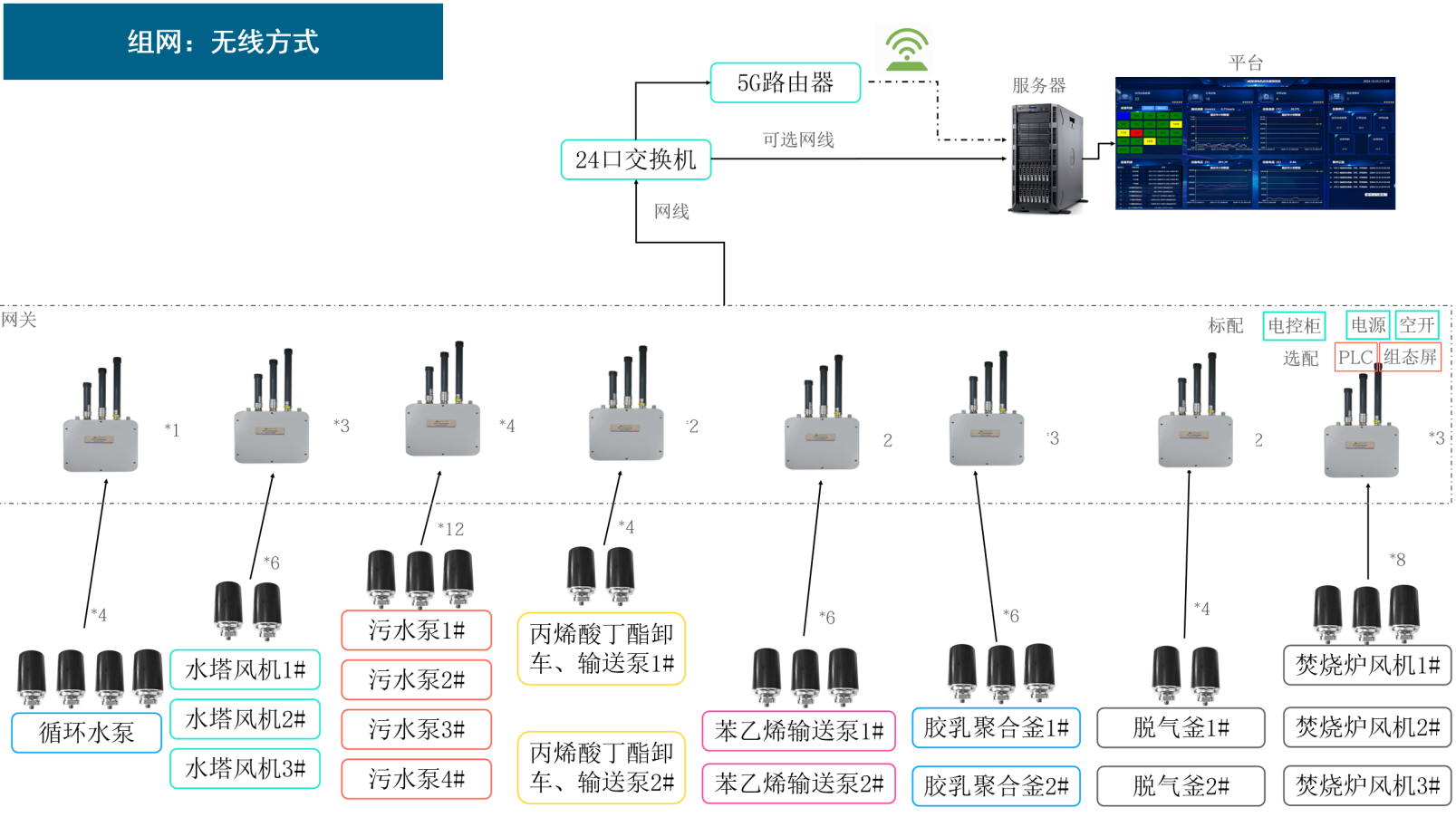
- Build a fully wireless transmission chain of “sensor -> explosion-proof gateway -> 5G router -> platform” with a packet loss rate < 1%.
- Connect to an industrial equipment health management platform for fault warning push and historical trend analysis.
- Drive the enterprise from “planned maintenance” to “predictive maintenance”, reducing maintenance cost by more than 20%.
2. Solution
2.1 Overall system architecture
A four-layer wireless transmission architecture with no signal cabling at all, minimizing construction difficulty and production impact in hazardous areas:
| Layer | Core equipment | Location | Function |
|---|---|---|---|
| Sensing layer | Intrinsically safe wireless temperature-vibration sensor | Motor bearing housing / pump body | Vibration + temperature acquisition |
| Aggregation layer | Explosion-proof wireless gateway Exd IIC T4 Gb | Wall-mounted in each pump area | Wireless data aggregation/forwarding |
| Transmission layer | 5G/LTE industrial router | Distribution room / control room | Remote data transmission |
| Platform layer | Vibration fault diagnosis system platform | Enterprise intranet / cloud | Data analysis / warning display |
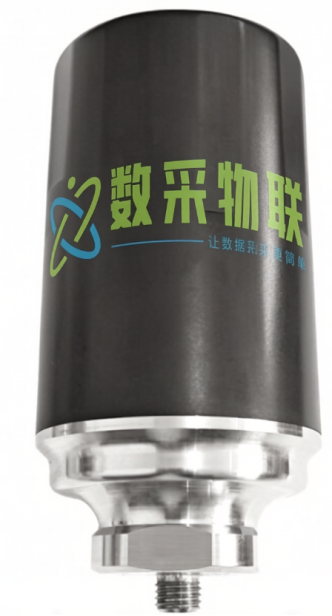
2.2 Core product: intrinsically safe wireless temperature-vibration sensor
| Parameter | Specification |
|---|---|
| Explosion-proof mark | Ex ia IIC Ga / Ex ia IIC T4 Db (intrinsically safe) |
| Certificate | CCRI 23.7515X |
| Vibration range | Acceleration 0-200 m/s2, velocity RMS 0-10 mm/s |
| Frequency response | 10-5000 Hz (-3dB), covering common mechanical fault frequencies |
| Temperature range | -40 to +125 degC, accuracy +/-1 degC |
| Wireless communication | Sub-1GHz (470-510 MHz), strong penetration and good anti-interference |
| Power | Built-in lithium-thionyl chloride battery, life > 3 years, external 3.6V supply supported |
| Protection rating | IP68, suitable for harsh industrial environments |
| Mounting | Magnetic or M8 stud mounting, no drilling, zero damage to equipment |
2.3 Explosion-proof design
The chemical plant area is an explosive gas environment (Zone 1/Zone 2), with gas groups mainly IIC (involving butadiene, styrene, acrylates and other high-risk media). All electrical equipment has national explosion-proof certification:
- Sensors use intrinsically safe (ib/ia) design, so even an internal fault will not ignite surrounding explosive gas.
- The gateway box uses a flameproof (Exd) explosion-proof junction box, isolating ignition sources with an increased-safety enclosure.
- All construction strictly follows the hot-work/temporary-power permit system, ensuring zero safety accidents.
2.4 Wireless communication scheme
A Sub-1GHz industrial wireless protocol (470-510 MHz) is used between sensors and the explosion-proof gateway, with strong penetration and good anti-interference, particularly suitable for the dense metal piping environment of chemical plants. A single gateway can connect up to 37 sensor nodes with a coverage radius of about 100-300 m. This project configured 3 explosion-proof gateways covering the butadiene pump shed area (13 sensors), the latex unit area (16 sensors) and the circulating water pump house/incinerator area (8 sensors).
3. Implementation
3.1 Monitoring coverage
The project covers 13 core power devices across 5 functional areas, with about 37 sensor points installed in total:
| Equipment | Motor power | Area | Points |
|---|---|---|---|
| Butyl acrylate transfer/unloading pump | 11 kW | Latex pump shed area | 4 |
| Styrene transfer/unloading pump | 11-37 kW | Latex unit area | 6 |
| Butadiene canned-motor pump | 18.5 kW | Butadiene pump shed area | 4 |
| Butadiene unloading pump | 18.5 kW | Butadiene pump shed area | 4 |
| Butadiene compressor | 22 kW | Butadiene area | 2 |
| Circulating water pump | 110 kW | Circulating water pump house | 2 |
| Incinerator combustion-supporting fan | 7.5 kW | Incinerator area | 2 |
| Acrylic acid transfer pump | 7.5 kW | Latex unit area | 2 |
3.2 On-site installation
Construction started in May 2026 and went through site survey, equipment installation and system commissioning, completing all construction and passing acceptance in July 2026. Key milestones:
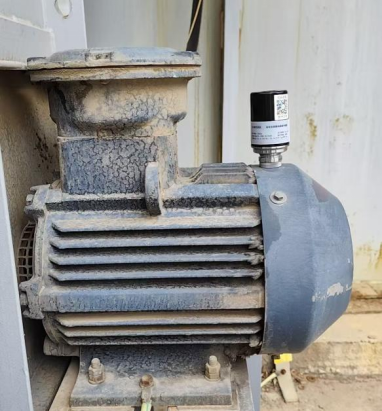
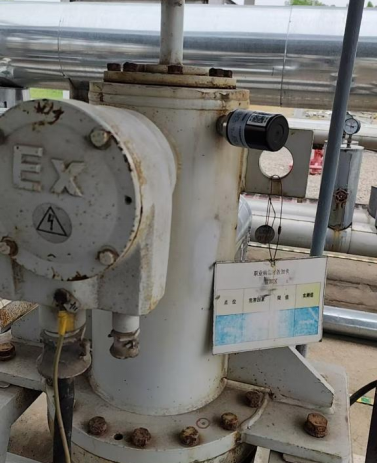
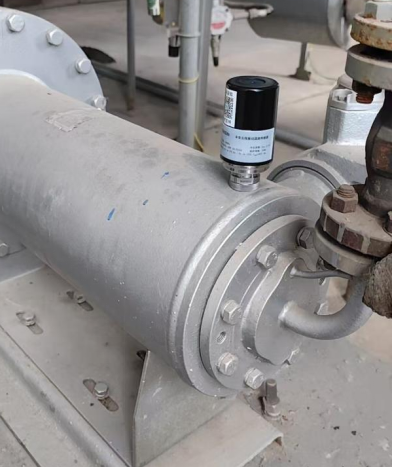
3.2.1 Sensor installation — sensors were mounted with magnetic bases on the drive-end/non-drive-end bearing housings and key pump-body points; contact surfaces were ground and cleaned to bare metal before installation to ensure signal accuracy. For stainless-steel canned-motor pumps, M8 stud fixing was used.
3.2.2 Explosion-proof gateway deployment — 3 explosion-proof wireless gateways were deployed on walls near each pump area, wall-mounted with external LoRa antennas for coverage. The gateway enclosure is Exd flameproof with a “no opening while energized” warning label.
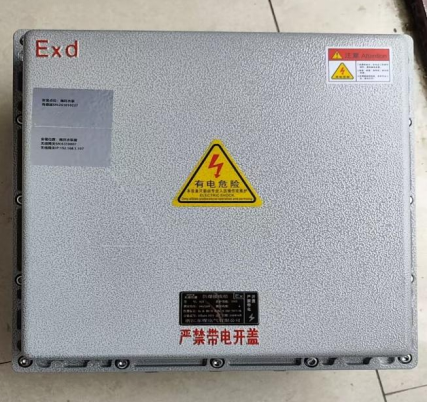
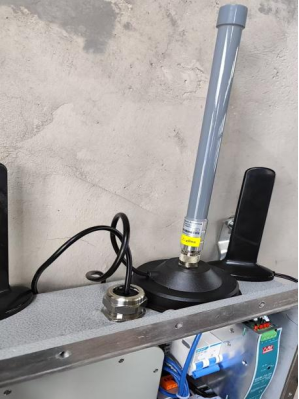
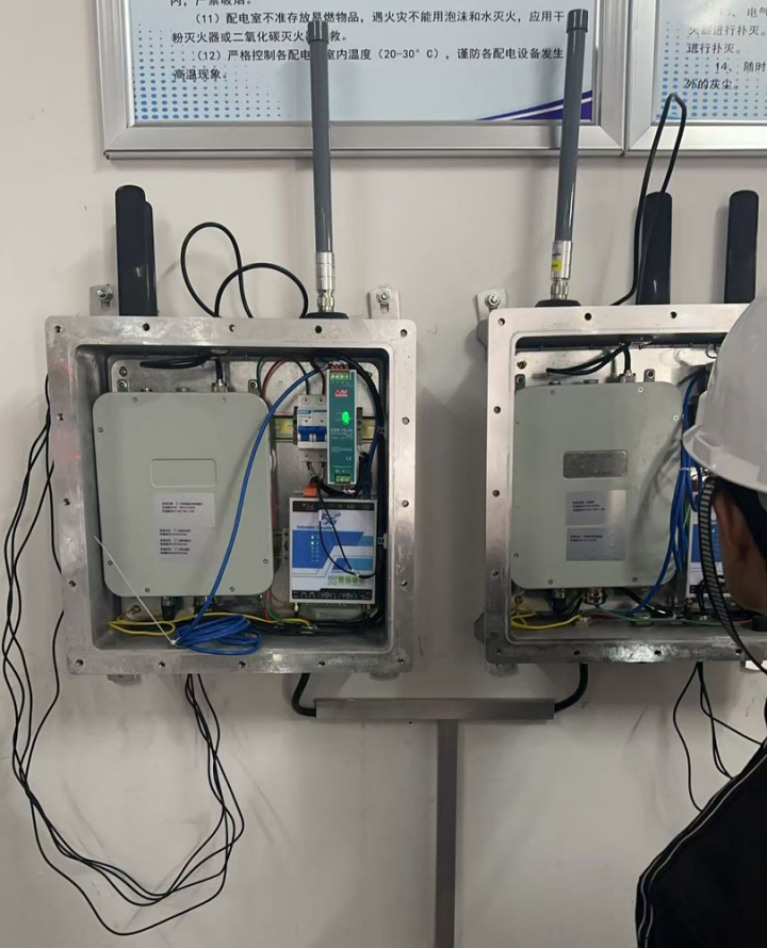
Exd flameproof explosion-proof wireless gateway box exterior and module installation details
3.2.3 Completed installation — after all equipment was installed the site presented a standard, tidy result. Gateway boxes drew power nearby with reliable grounding, and sensors were evenly distributed with clear labeling.
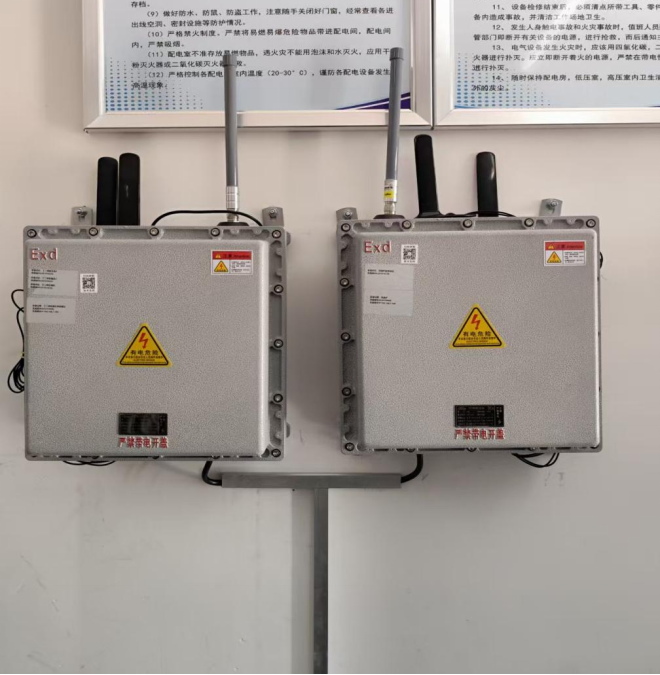
Two explosion-proof gateway boxes installed side by side
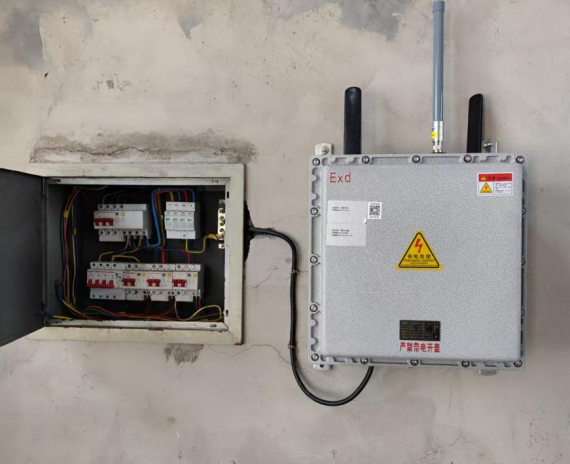
Electrical connection between the gateway box and the distribution cabinet completed
3.2.4 Equipment area overview
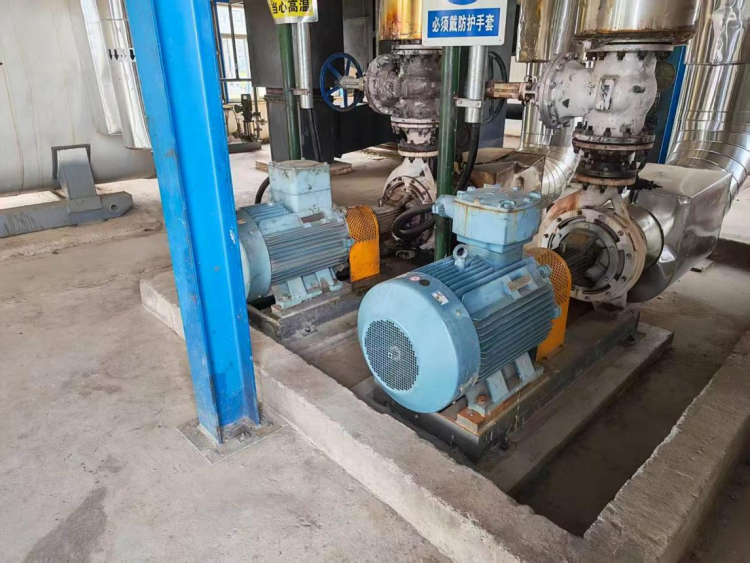
Indoor pump shed area panorama with sensors added to multiple motors
4. Platform Application Results
4.1 Vibration fault diagnosis system
All sensor data is uploaded in real time through the explosion-proof gateways and 5G network to the “vibration fault diagnosis system” of the industrial equipment health management platform. The platform provides a complete set of functions including equipment monitoring dashboard, trend analysis, spectrum analysis and fault warning:
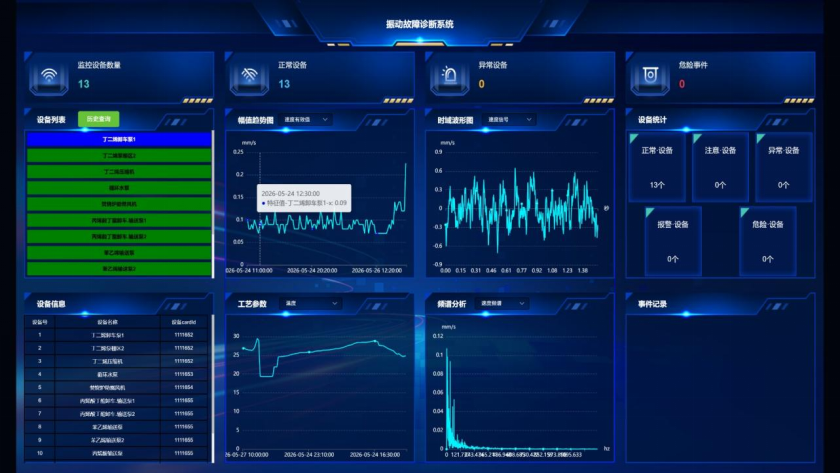
Main interface of the vibration fault diagnosis system — all 13 devices monitored online and normal
4.2 Data analysis capability
The platform provides multi-dimensional data analysis including time-domain waveforms, frequency-domain analysis and performance-parameter trends, helping O&M staff precisely locate equipment anomalies:
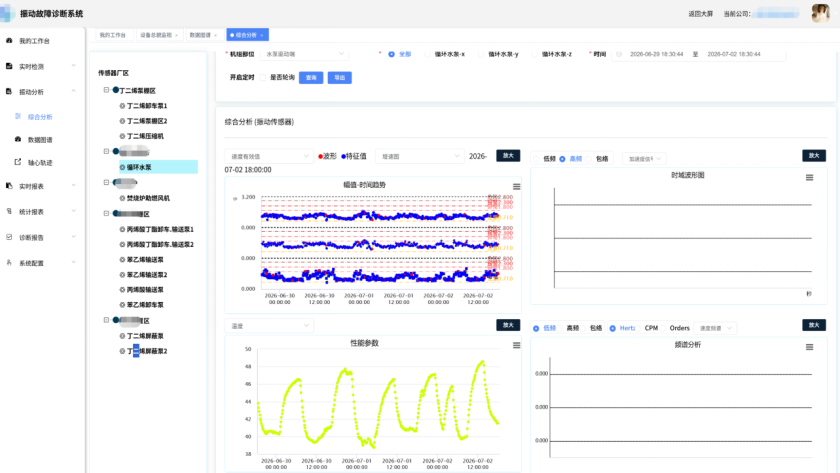
Comprehensive analysis interface — amplitude trend, time-domain waveform, performance parameters and spectrum analysis in four linked views
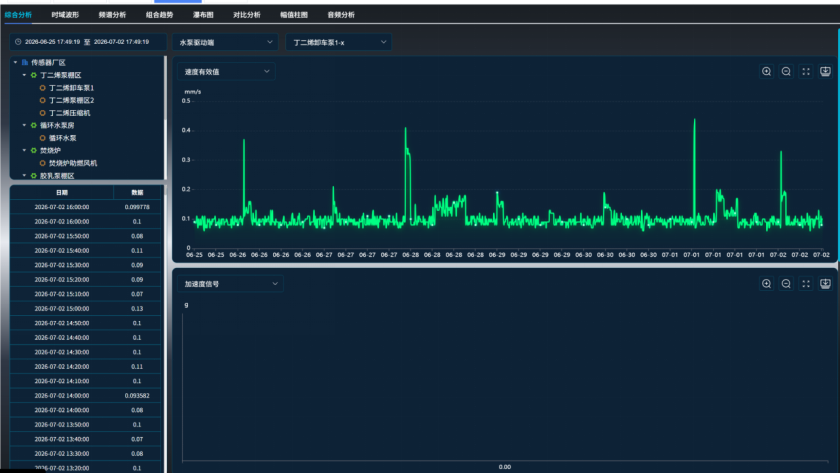
Detailed spectrum analysis — identifying typical fault characteristic frequencies such as unbalance, misalignment and bearing faults
4.3 Project results
| Indicator | Target | Achieved |
|---|---|---|
| Devices monitored | >= 10 | 13 (30% over target) |
| Sensor online rate | >= 95% | 100% (all online) |
| Data acquisition period | <= 5 min | <= 5 min (met) |
| Wireless signal strength | RSSI >= -80 dBm | -65 to -78 dBm (excellent) |
| Temperature accuracy | deviation <= 2 degC | <= 1.5 degC (better than target) |
| Grounding resistance | <= 4 ohm | 1.2-2.8 ohm (qualified) |
| Construction period | ~15 working days | 7 days (ahead of schedule) |
| Safety accidents | 0 | 0 (met) |
5. Application Value
5.1 Economic benefits
- Reduced unplanned downtime: with early fault warning, an estimated 2-3 sudden shutdown events avoided per year with indirect economic benefits exceeding RMB 1 million.
- Optimized spare-part management: spare-part procurement planned on actual equipment health, reducing spare-part inventory capital by about 25%.
- Extended equipment life: early defects detected and handled in time, preventing minor faults from becoming major damage and extending key equipment life by 15%-20%.
- Reduced O&M manpower: shifting from passive inspection to active warning improved inspection efficiency by more than 40%.
5.2 Safety benefits
- Intrinsically safe design: intrinsically safe explosion-proof sensors can be used safely even in hazardous areas without adding risk.
- Leak prevention: pump seal failure and bearing overheating can be detected early, effectively preventing hazardous-chemical leakage accidents.
- Compliance: meets the requirements of the Guidelines for Hazardous Chemical Enterprise Safety Risk Inspection, Investigation and Governance for condition monitoring of key equipment.
5.3 Digital transformation value
- Data asset accumulation: a complete equipment operation database provides a data foundation for later AI model training and intelligent decision-making.
- Transparent management: management can view equipment health at any time on mobile devices, with data-based decisions.
- Replicable: the project forms a mature predictive-maintenance solution for the chemical industry that can be quickly replicated to other units and bases.
6. Summary and Outlook
The project successfully achieved wireless temperature-vibration online monitoring of 13 core power devices at the chemical production base, building a complete technical chain from sensing and transmission to analysis and warning. Its smooth implementation fully validated key technical capabilities: the reliability of intrinsically safe wireless sensing in Zone 1/Zone 2 explosive hazardous environments; the stable penetration of Sub-1GHz wireless communication in dense metal piping environments; the effective identification of typical rotating-machinery fault modes by vibration fault diagnosis algorithms; and the feasibility and safety of a no-production-stop construction scheme in continuous-production enterprises.
Looking ahead, the project will deepen its application: expanding monitoring coverage to progressively include all class-A key equipment in the plant, and introducing AI fault-prediction models to leap from “condition monitoring” to “remaining-life prediction”, helping the enterprise move fully into the era of intelligent manufacturing.