Shaoxing Textile Printing & Dyeing Factory Energy Monitoring - Water, Electricity, Gas & Power Efficiency Case
Shaoxing Textile and Printing-Dyeing Factory Energy-Consumption Monitoring Project — Water, Electricity, Gas and Power-Efficiency Monitoring Terminal Acquisition
Get a QuoteShaoxing Textile and Printing-Dyeing Factory Energy-Consumption Monitoring Project — Water, Electricity, Gas and Power-Efficiency Monitoring Terminal Acquisition
1. Project Background and Requirements
Location: Zhejiang Shaoxing Jinxianghui Textile Printing and Dyeing Factory.
Shaoxing Jinxianghui Textile Printing & Dyeing Co., Ltd. was founded in May 2007 (originally Shaoxing County Jinxianghui Textile Printing & Dyeing Co., Ltd.) and is located at 1688 Zhenghai Road, Ma’an Street, Keqiao District, Shaoxing. It specializes in the dyeing and finishing of various textile fabrics.
Background: energy-consumption monitoring at a printing and dyeing plant.
To achieve in-plant energy statistics with real-time monitoring of water, electricity and gas data, the plant needed data acquisition from electricity meters, water and gas meters and power-efficiency monitoring terminals — especially for mechanical water meters with no external communication interface and for State Grid protocol meters whose RS485 interface is occupied or whose meter is lead-sealed. The goal was low-cost acquisition with simple wiring and wireless transmission.
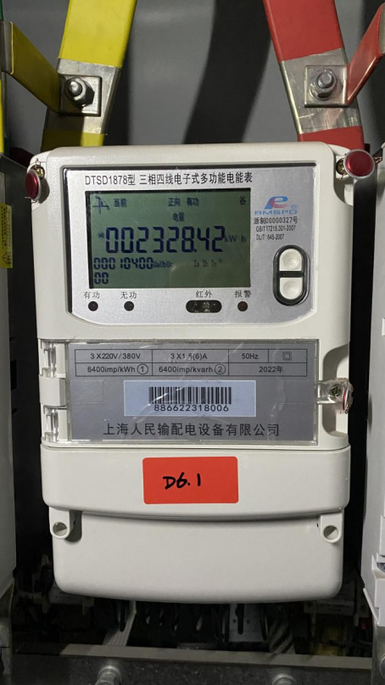
1.1 Remote Real-Time State Grid Meter Data Acquisition
Plant meters
1.2 Visual Acquisition of Industrial Water and Gas Meter Data
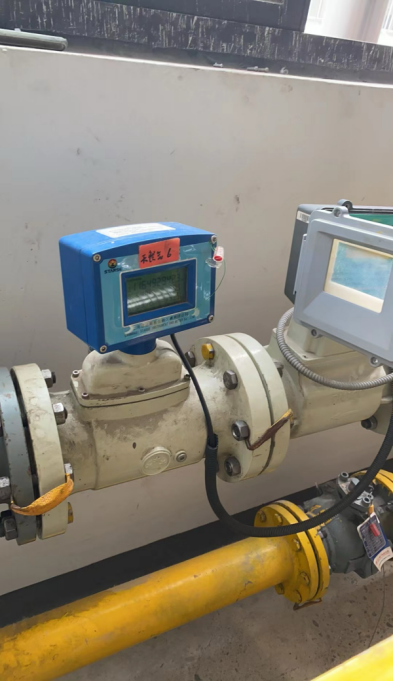
Gas meter
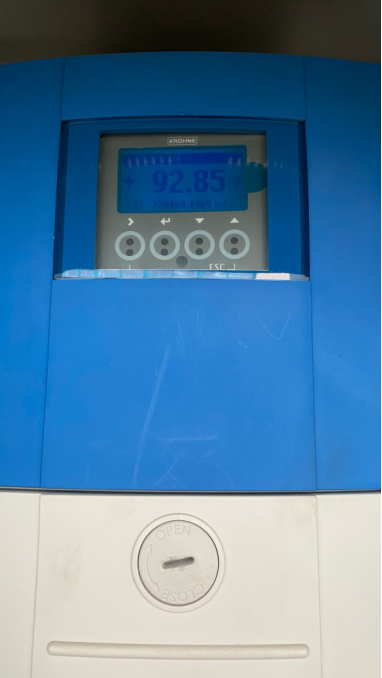
Industrial water meter
1.3 Power-Efficiency Monitoring Terminal Data Acquisition
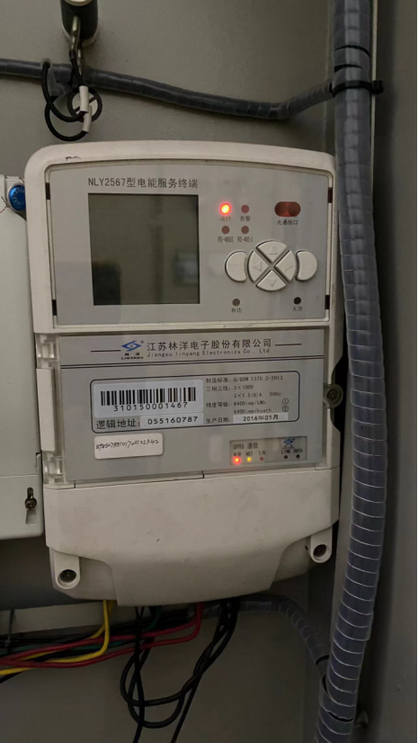
Power-efficiency monitoring terminal
This device is brand Linyang, model TLY2565, supports the 645 protocol, can be read through an RS485 interface and needs 4G transmission to the customer platform.
2. Technical Solution
2.1 Meter Acquisition
Our flagship 4G infrared meter-reading product (SC-GP-IR4G) is used, reading via the meter’s infrared communication port and transmitting over 4G to the customer platform — non-invasive installation and acquisition.
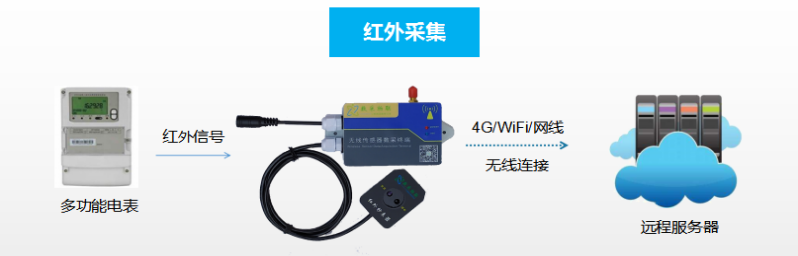
Meter acquisition solution
2.2 Water and Gas Meter Acquisition
Plant industrial water and gas meters are read with a micro-power wireless photo meter reader (SC-LP-CAM), using OCR recognition, with data transmitted to the platform.
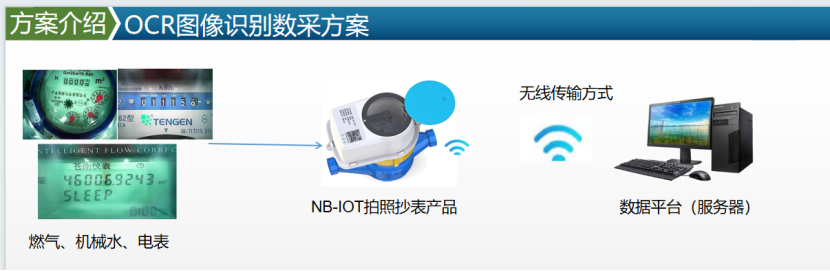
Water and gas meter acquisition solution
2.3 Power-Efficiency Monitoring Terminal Acquisition
The TLY2565 power-efficiency monitoring terminal supports 485 communication; the RS-485 interface protocol can be configured to support DL/T645.
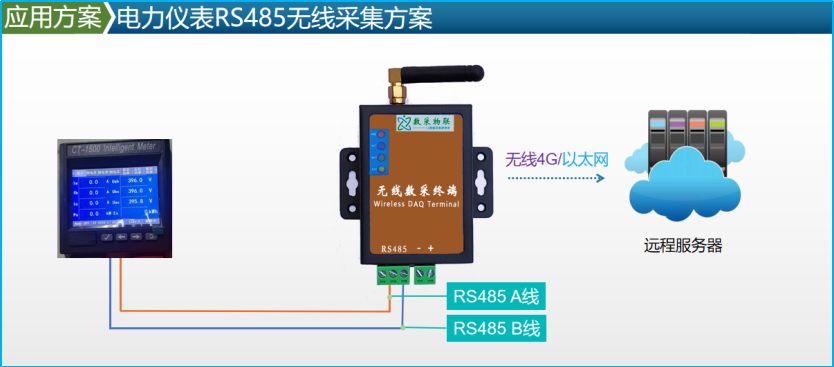
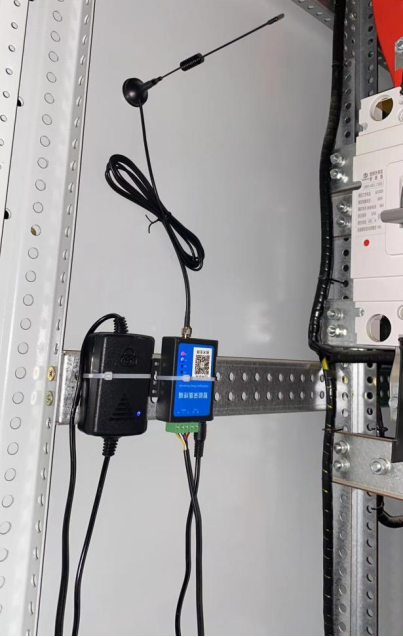
Power-efficiency monitoring terminal acquisition solution
3. On-Site Implementation and Installation
3.1 Meter Data Acquisition
Meter acquisition is relatively simple: aim the 4G infrared meter-reading probe at the meter’s infrared communication port and fix it, then power up the acquisition device; after remote protocol debugging the meter data is acquired in real time and pushed to the customer platform. An ordinary worker can install it, greatly reducing labor cost.
On-site note: the supplied suction-cup antenna must be placed in an open position to avoid a closed environment affecting 4G signal transmission.
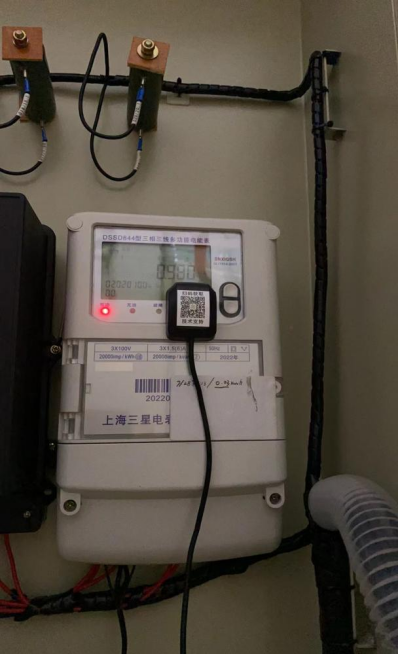
On-site installation of the 4G infrared meter reader
3.2 Water and Gas Meter On-Site Acquisition
The micro-power wireless photo meter reader is placed directly over the water or gas meter and fixed with a cable tie or 3M adhesive; the photo frequency is set and data is transmitted periodically to the platform for recognition. This device is explosion-proof, battery-powered and low-power, making it suitable for gas-meter installation.
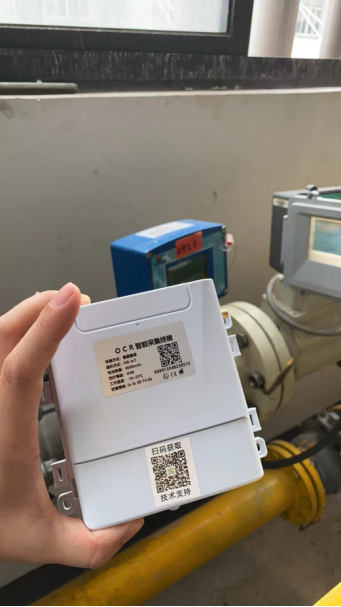
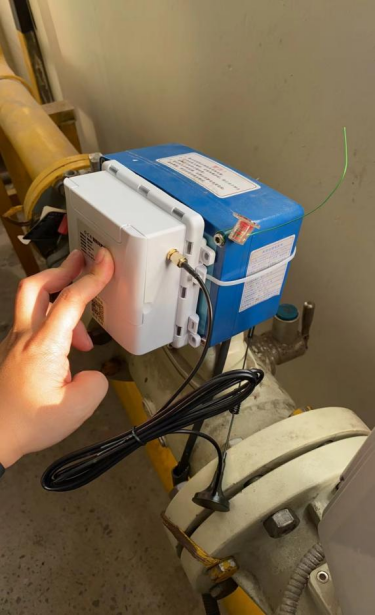
On-site installation of the micro-power wireless photo meter reader
3.3 Power-Efficiency Monitoring Terminal Data Acquisition
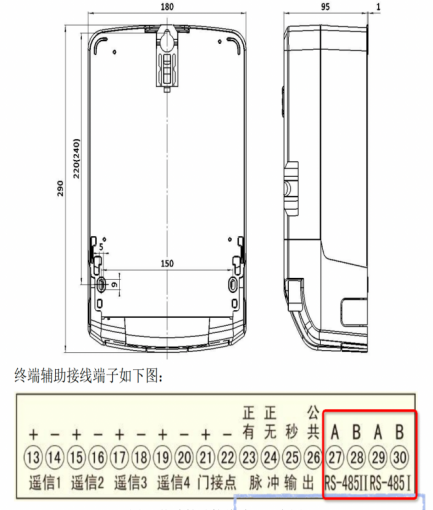
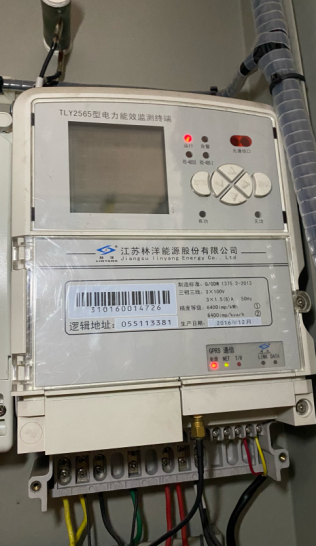
On-site collector installation wiring diagram
The terminal provides an RS485 interface, and its communication protocol supports DL/T 645. It connects to our 4G acquisition module through a 485 twisted-pair cable, and after remote protocol debugging data is acquired and pushed over 4G to the customer’s designated third-party cloud platform.
4. Third-Party Data Push Format
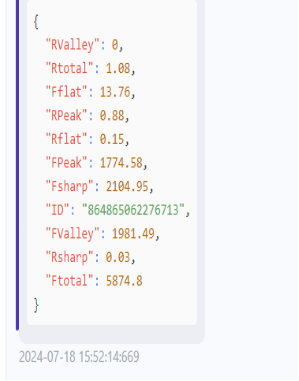
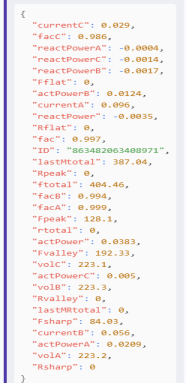
Our 4G devices can push data directly to third parties, with free TCP/UDP transmission and JSON data format by default. The format received by the customer server is shown below.
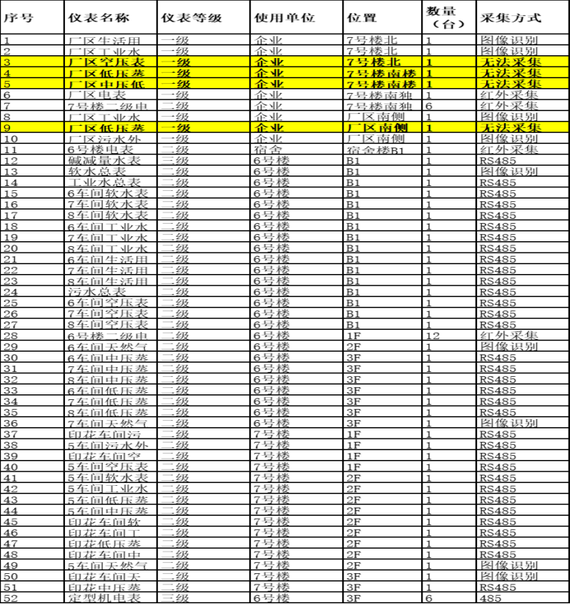
5. Partial Instrument List of the Park