Data Acquisition & Monitoring Solar Power Systems
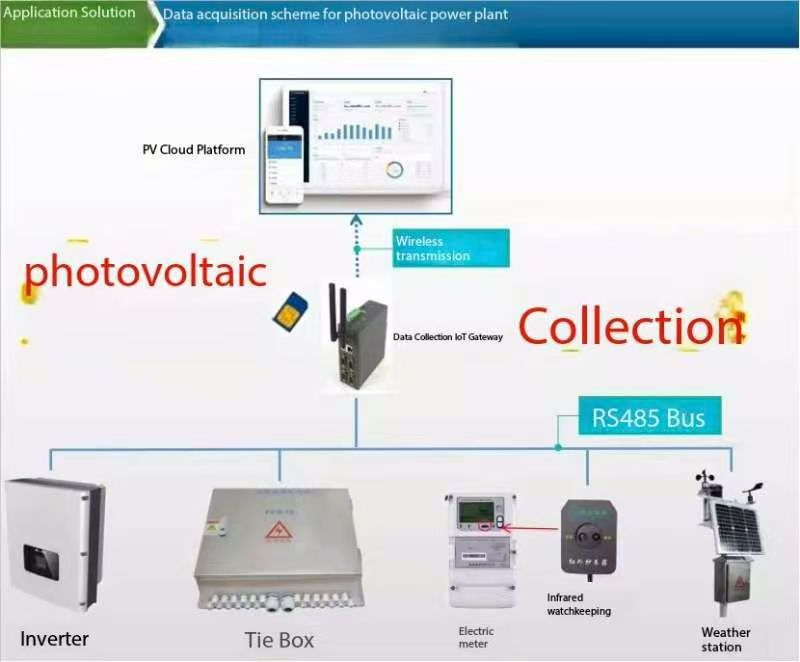
A grid-connected photovoltaic power generation system refers to a system where the direct current generated by solar cells using solar radiant energy (i.e., the “photovoltaic effect” of solar cells) is converted into alternating current through a grid-connected photovoltaic inverter and transmitted to the power grid. In essence, it is a power station that generates electricity using solar energy. Compared with power station systems that generate electricity through traditional energy sources such as coal, oil, and natural gas, grid-connected photovoltaic power generation systems have the advantages of being renewable and non-polluting. Photovoltaic modules generate current through the photovoltaic effect, which is then inverted by an inverter to convert direct current into alternating current. After that, the alternating current is boosted to 10kV through a photovoltaic booster and connected to the 10kV busbar of the grid-connected cabinet in the electrical room for grid connection. The electricity meter protocol supports DLT645-1997/2007 and DLT698.45 protocols. The acquisition gateway supports intelligent lightning protection combiner boxes, DC lightning protection distribution cabinets, inverter systems, AC lightning protection distribution cabinets, transformers, system power distribution, and box-type transformers. Relying on rich experience and resources in electrical system scheme integration and supply chain integration, the product supports the electric power E-file standard, supports the IEC61850 protocol, is compatible with inverter components and horizontal isolation equipment from various manufacturers as well as high and low voltage distribution cabinets, and can be connected to various power monitoring systems and power dispatching systems, enabling the rapid implementation of photovoltaic power station projects.
❓ Data Acquisition & Monitoring Solar Power Systems – FAQ
1. What is a solar power data acquisition and monitoring system?
It is an integrated system that collects, transmits, and analyzes data from solar power equipment such as inverters, batteries, and environmental sensors. It enables real-time monitoring of system performance, energy generation, and equipment status remotely.
2. What types of data can the system collect?
The system can collect a wide range of data, including:
Solar panel voltage and current
Battery charge/discharge status
Inverter operating parameters
Temperature, humidity, and environmental data
Energy production and consumption data
3. How does the data transmission work?
Data is collected through sensors and controllers, then transmitted via 4G, WiFi, Ethernet, or LoRa (optional) to a cloud platform or local server for real-time visualization and analysis.
4. Can I monitor the system remotely?
Yes. Users can access the monitoring platform through a web browser or mobile app, allowing real-time viewing of system performance, historical data, and alarm notifications from anywhere in the world.
5. What happens when abnormal conditions occur?
The system supports intelligent alarm functions, such as:
Over-voltage or under-voltage alerts
Battery failure warnings
Communication loss alarms
Temperature anomaly detection
Alerts can be sent via email, SMS, or platform notifications.
6. Is the system suitable for off-grid solar projects?
Yes. The system is widely used in off-grid and hybrid solar power systems, especially in remote areas where stable grid power and manual monitoring are not available.
7. Can the system integrate with existing SCADA or IoT platforms?
Yes. The solution supports Modbus, RS485, MQTT, and API integration, allowing seamless connection with SCADA systems, IoT platforms, and energy management software.
8. What industries use solar data acquisition and monitoring systems?
It is commonly used in:
Solar PV power plants
Microgrid and hybrid energy systems
Telecom base stations
Remote industrial power systems
Smart grid and energy management projects
Environmental monitoring stations