Tilt & Vibration Sensor
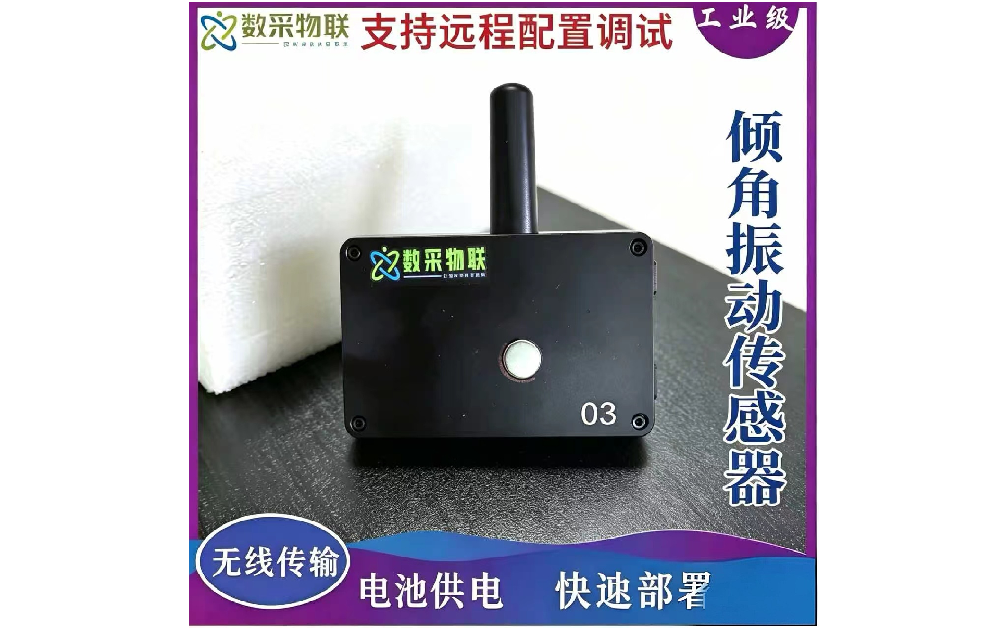
DAQ-LP-TVNB tilt & vibration sensor is an intelligent monitoring device launched by Shanghai DAQ IoT Technology Co., Ltd., specially designed for bridges, viaducts, roads and buildings. It adopts NB-IoT technology and integrates c…
Get a QuoteProduct Details
1 Product Overview
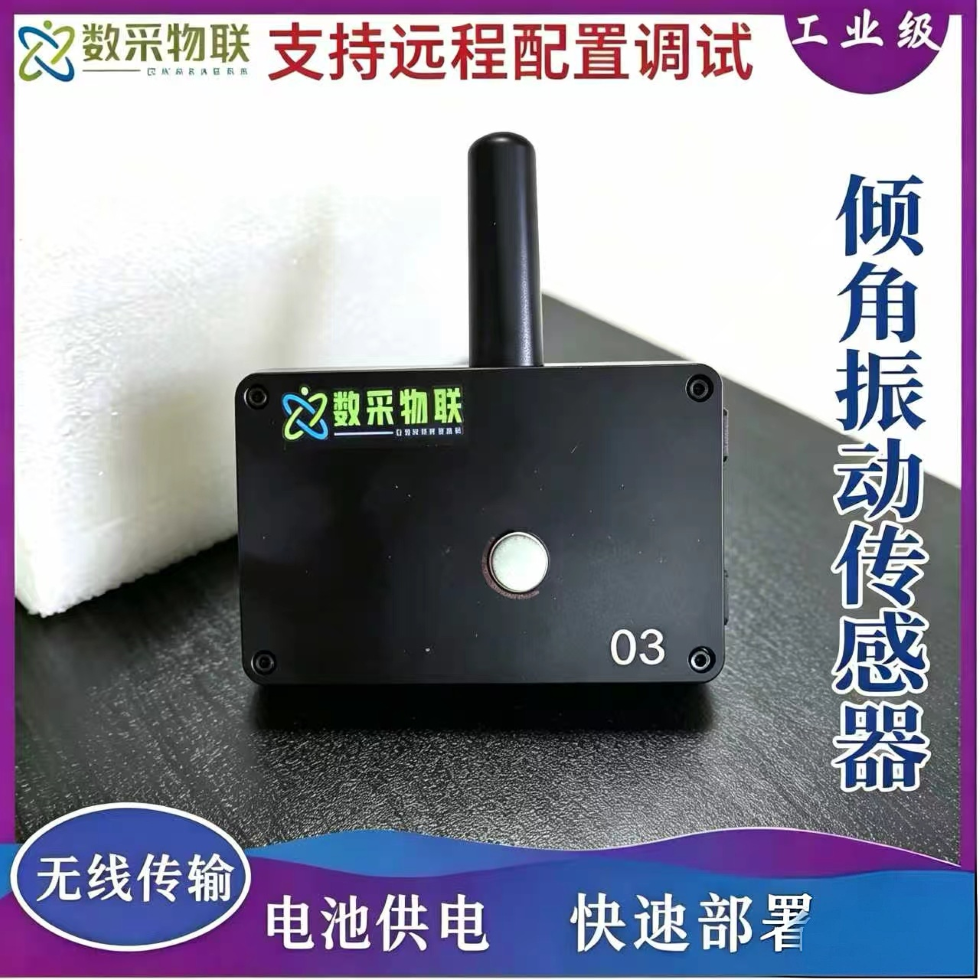
DAQ-LP-TVNB tilt & vibration sensor is an intelligent monitoring device launched by Shanghai DAQ IoT Technology Co., Ltd., specially designed for bridges, viaducts, roads and buildings. It adopts NB-IoT technology and integrates core functions such as vibration monitoring and online warning, enabling real-time monitoring of safety status and timely detection of abnormal events such as damage and collision with alarms triggered, providing round-the-clock, all-dimensional intelligent protection for infrastructure safety.
It is suitable for all displacement measurement needs of bridges, viaducts, roads and buildings, and can be widely used in the safety monitoring of infrastructure such as municipal transportation, expressways and bridges/tunnels/buildings.
3 Core Advantages
Extreme environmental adaptability: supports wide-temperature operation from -40℃ to +80℃, with IP67 high protection rating, adapting to various harsh weather conditions;
Low power consumption and long endurance: powered by a 6000mAh lithium-thionyl chloride battery, with an annual self-discharge rate of ≤2% and a design service life of ≥3 years;
Intelligent and precise monitoring: false alarm rate below 1%, with adaptive learning that optimizes the monitoring algorithm according to the actual scenario;
Fast alarm response: abnormal events are reported in real time, and it supports linkage with information boards and public address systems for intuitive warning effects.
4 Technical Parameters
4.1 Basic Parameters
| Parameter category | Specific specification |
|---|---|
| Ambient temperature | Operating temperature: -40℃ ~ +80℃; storage temperature: -55℃ ~ +85℃ |
| Relative humidity | 0 ~ 90% RH (at 20℃, non-condensing); 5% ~ 100% RH (operating) |
| Device dimensions | 55mm × 120mm × 75mm |
| Device weight | ≤0.5KG |
| Protection rating | IP67 |
| Power supply | Primary lithium-thionyl chloride battery (3.6V) |
| Battery capacity | 6000mAh |
| Max. continuous discharge current | ≥500mA |
| Max. pulse discharge current | ≥1000mA |
| Power consumption level | Whole device ≤50uA; vibration monitoring module ≤10uA; typical current in PSM mode 3.5μA |
4.2 Monitoring Performance Parameters
| Monitoring item | Technical specification |
|---|---|
| Vibration acceleration range | ±2g |
| Vibration frequency range | 12.5Hz ~ 6.66KHz |
| Vibration monitoring communication | Interrupt-triggered mode, I2C interface communication |
| False alarm rate | Below 1% |
4.3 Communication Parameters
| Communication category | Specific specification |
|---|---|
| Transmission mode | NB-IoT (compliant with the “NB-IoT Industry Application Specification Guide”) |
| Communication band | B1/2*/3/4*/5/8/12*/13*/17*/18*/19*/20/25*/26*/28*/66* |
| Transmit power | 23±2dBm (max) |
| Network protocol | MQTT |
| Serial baud rate | 4800-921600bps (default 115200bps) |
| USIM interface | eSIM card supported |
| USB interface | Compliant with USB1.1, max transfer rate 12Mbps |
4.4 Main Control Parameters
| Main control item | Technical specification |
|---|---|
| Main control clock frequency | ≥108MHz (independent main control) |
| Core configuration | ARM® 32-bit Cortex®-M4 |
| Program storage | 256kB + 64kB |
| ADC resolution | 12bit |
| Operating supply voltage | 1.8V ~ 3.63V |
5 Core Functions
5.1 Online Monitoring
The device supports 24-hour online monitoring and actively uploads monitoring data via the NB-IoT network. Users can view device working status, battery level, monitoring data and other information in real time on the backend. The heartbeat reporting frequency is independently configurable (adjustable from 5-9999 minutes) to meet the monitoring needs of different scenarios.
5.2 Alarm Function
It has special vibration monitoring capability. When abnormal vibration such as guardrail damage or collision is detected, the device automatically wakes up and triggers an alarm. The alarm signal is uploaded to the management platform in real time via the NB-IoT network, ensuring staff obtain abnormal information at the earliest opportunity.
5.3 Warning Function
During an abnormal alarm, the device’s built-in warning light flashes; it can also be linked with optional information boards and public address systems for both visual and audible warning, effectively deterring destructive behavior. The backend supports configuring the warning light flashing within an authorized time period, improving warning flexibility.
6 Notes
Installation must comply with relevant standards such as the “Code for Design of Urban Roads” and the “Code for Construction and Acceptance of Electrical Installation Engineering”;
Do not dismantle the device housing without authorization; otherwise the warranty is voided and the device may be damaged;
Avoid installing the device in strong magnetic fields, near high-temperature heat sources or in chemically corrosive environments;
When replacing the battery, use a lithium-thionyl chloride battery of the same specification; never mix different battery types;
During use, comply with the relevant national radio communication management regulations and do not modify communication parameters without authorization;
During the warranty period, non-human-caused faults qualify for free repair or replacement (the warranty period is subject to the product certificate).